Every year, the federal government is supposed to pass a budget before the new fiscal year begins on October 1. A fiscal year is simply the government’s 12‑month accounting period—running from October 1 to September 30—so Congress must approve funding before that date to keep agencies operating normally.
“Finishing the budget” means passing all 12 annual appropriations bills that provide discretionary funding for federal departments and programs. These bills cover everything from defense and transportation to education and public health. Without them, the government has to rely on temporary funding patches or, in the worst case, shut down. Note that while the appropriations bills include very important programs, they only cover around 25% of total government expenditures. The remainder is mandatory spending—Social Security, Medicare, Medicaid, food stamps, interest on the debt, etc.—-which is on autopilot.
Congress Hasn’t Finished a Budget on Time in Thirty Years
Congress hasn’t finished a budget on time since 1996. Every year since, lawmakers have blown past the October 1 deadline and fallen back on stopgap measures such as continuing resolutions (CRs) that maintain funding at prior year levels. This year is no different: FY2026 began on October 1, 2025, and by February 2026 the budget still isn’t finished. Last year’s delays even triggered a 43‑day government shutdown, the longest in U.S. history.
This start and stop funding creates serious problems because it prevents agencies from planning or operating normally. Under a CR, for instance, agencies can’t start new programs, adjust to changing needs, or award new contracts and grants. Hiring often gets put on hold, projects pile up, and managers can be forced into inefficient “use‑it‑or‑lose‑it” spending once full-year funding finally arrives and there is less time to allocate the funds properly.
States Are Better at Finishing the Budget On Time
Across the country, states consistently do a far better job than Washington when it comes to finishing their budgets on time. Year after year, roughly 85–92% of state governments meet their annual deadlines—demonstrating that it is possible to run a predictable, functional budget process even with bicameral legislatures in politically divided environments.
| Fiscal Year |
State Budgets Finished On Time |
Federal Budget Finished OnTime |
| FY 2022 |
92% |
No |
| FY 2023 |
91% |
No |
| FY 2024 |
85% |
No |
| FY 2025 |
89% |
No |
| FY 2026 |
85% |
No |
| Source: Concord Action calculations based on the National Conference of State Legislators, State Budget Status data. |
Stay on Schedule…
The solution is surprisingly simple: Congress should follow the budget schedule already laid out in the Congressional Budget Act of 1974. This timeline requires the President to present a budget by the first Monday in February and Congress to adopt a concurrent Budget Resolution by April 15, setting spending and revenue targets for the budget. According to the schedule, the House must pass all 12 annual appropriations bills by June 30, which then allows three months for the legislation to clear the Senate, conference committee, and make it to the President’s desk for signature before the new fiscal year begins on October 1.
Of course, the President and Congress routinely ignore these deadlines which means the federal government is perpetually late. Congress has completed a budget on time four times since 1977.
…Or Don’t Get Paid
If Congress can’t meet its most basic responsibility, Members shouldn’t get paid. That’s the idea behind the No Budget, No Pay Act of 2025 (S. 88 and H.R. 5755). These bills would dock lawmakers’ pay for every day they fail to pass the budget resolution by April 15 and all 12 appropriations bills by September 30. Continuing resolutions don’t count. The law would apply to future congresses starting in 2027.
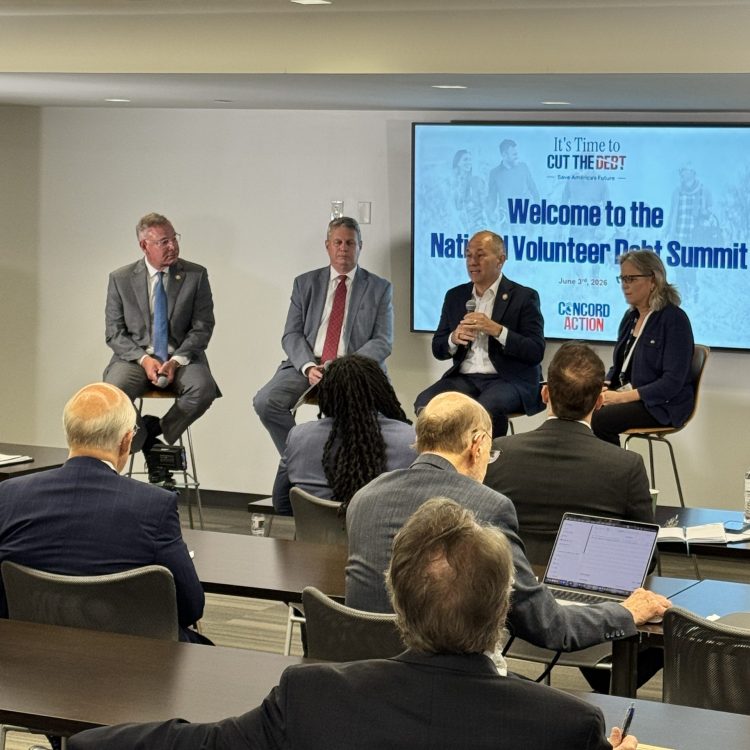
The effect of this bill could be significant. Representative Scott Peters, co-sponsor of the House version of No Budget, No Pay Act, recently explained on the Concord Coalition’s podcast Facing the Future, how well this proposal has worked in the state of California:
“They enacted this rule in 2010. They were always late and the first year that they enacted this no-budget, no pay rule, I think they were over, like, three days, and then everyone realized, ‘oh my gosh, I’m not getting paid.’ They passed their budget, and they were never late again because they had skin in the game.”
In Congress, it’s been a different story. On average budget resolutions (which kick off the appropriations process) were 68 days late between 1987 and 2022 and, over the past 25 years, there have been an average of 113 days – or almost four months – between the start of each fiscal year and the date that year’s final spending bill became law. This means that, based on past performance, members of Congress could lose pay for almost half the year (181 days). Maybe that’s what it takes to get results.