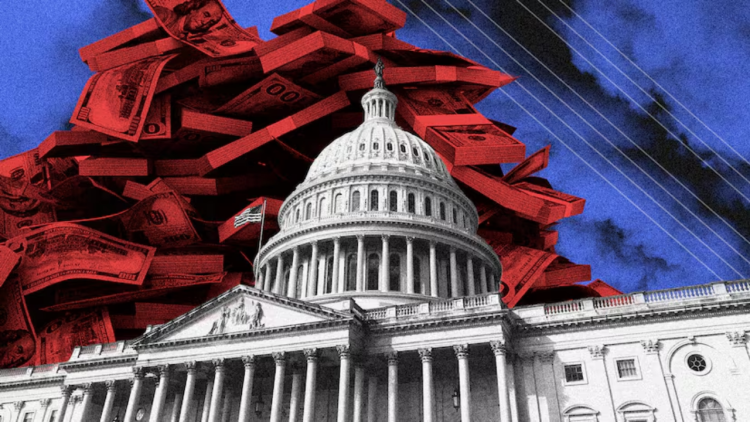
America’s $37 trillion national debt is no longer a distant concern—it’s a clear and present danger. Interest payments alone now eclipse what we spend on national defense, devouring nearly 20% of every tax dollar. This debt load is choking our ability to respond to urgent challenges and build a strong economy. The longer Congress delays, the steeper and more painful the fix becomes.
This isn’t theoretical. The consequences are already hitting home: we have experienced high inflation, and now see higher interest rates, tighter credit, and growing pressure on families and businesses. Moody’s recent downgrade of U.S. sovereign debt is a flashing red light, signaling growing doubts among financial institutions about our fiscal resolve. If lawmakers fail to act, we risk a cascading debt crisis that could stall the economy and permanently weaken America’s financial foundation. Yet, policymakers do not even have a plan for how to stabilize our budget and address the debt.
A Fiscal Commission Isn’t the Only Path—But It’s a Valuable One
Congress doesn’t need a commission to solve the debt crisis—but history shows that bipartisan commissions can be a highly effective tool. They bring lawmakers and experts together, elevate public awareness, and create a structured path toward real solutions. At a time when trust in government is low and fiscal challenges are mounting, a well-designed commission can help build momentum, foster accountability, and signal that Washington is serious about restoring America’s financial health.
Past commissions have a track record of producing recommendations that directly address the problem – and in some cases having those proposals enacted into law. The criticism of some earlier efforts is that the recommendations faced strong political headwinds and were not enacted. However, even commissions that did not directly change policy, did set the stage for future reforms. Some prominent bipartisan commissions include:
- The 1981 National Commission on Social Security Reform, often called the Greenspan Commission after its chairman Alan Greenspan, resulted in reforms that extended the solvency of Social Security by 50 years.
- In the late 1980s, after a long period of gridlock and bitter debate over military expenditures, Congress and the White House created the Defense Base Realignment and Closure Commission (BRAC), tasked with selecting which military bases would be shut. BRAC made five rounds of recommendations, closing more than 350 military bases and resulting in about $12 billion in savings each year until 2013.
While commissions are not a cure-all, it’s a good place to start. This history shows that they can, at minimum, provide a framework and get the issue back on the table for policymakers and the public.
What Can You Do? Tell Congress to Make a Plan to Lower the Deficit
Despite a growing deficit and the burden of financing our national debt, Congress has no plan whatsoever for how to tackle this problem. Congress can take the first (baby) step to dealing with this issue by adopting legislation to create a commission. One of the bills that seems to be gaining some traction in the US House of Representatives is the bipartisan Fiscal Commission Act. The bill creates a 16-member commission—made up of lawmakers from both parties and outside experts—charged with recommending solutions to stabilize the debt and restore trust in key federal programs like Social Security and Medicare.
The goal is to keep the debt-to-GDP ratio below 100% by 2039 and strengthen the solvency of key trust fund programs over the next 75 years. According to the Congressional Budget Office’s March 2025 projection—made before factoring in the OBBBA legislation or new tariff revenues—the debt is on track to reach 125% of GDP by 2039. Achieving the 100% target would require nearly $13 trillion in deficit reduction over that period, underscoring the scale of the challenge and the urgency of serious fiscal planning. Every year that goes by will make the challenge harder.
The Commission will hold public hearings across the country and deliver a detailed report by late 2026. Crucially, any recommendations will be fast-tracked in Congress—debated and voted on without delay or amendments—so real action can follow. The recommendations would still be subject to the filibuster in the Senate, so would need 60 votes to pass. Overall, this is a serious step toward fiscal sustainability, and it deserves public attention and support.